Barnardos Australia was invited to comment on the Exposure Draft Bill criminalising coercive control in intimate partner relationships. Read here.
Our CEO Deirdre Cheers endorsed an open letterprepared by the NSW Women’s Alliance to the NSW Attorney General and Minister Ward calling for a longer consultation process on the Coercive Control Bill and expressing concerns about several aspects of the Bill.
Dr Robert Urquhart, Head of Knowledge, Research & Outcomes, also facilitated an in-depth consultation with our Domestic and Family Violence (DFV) Strategy Group members. The Strategy Group members provided expert feedback as practitioners, highlighting the gaps in the legislation regarding the safety needs of children and young people and the use of third parties by perpetrators as a means of control, which informed our submission. In addition, our practitioners’ themes strongly resonated with feedback from Departmental First Nations roundtables with Aboriginal practitioners in Dubbo and Kempsey, which Tina West, Manager Gurung Wellama, and Robert attended to represent Barnardos.
The Department of Communities and Justice also invited Barnardos to comment on two new five-year plans – the NSW Domestic and Family Plan (read submission here) and the NSW Sexual Violence Plan (read submission here).
All three submissions below highlight the need to recognise children and young people as equal victim-survivors of DFV in their own right with their own safety and support needs.
“We never give up” is at the heart of everything we do at Barnardos.
We never give up on supporting vulnerable children, young people and families. We walk beside them on their journey for as long as it takes. We recognise the challenges they face and we use our shared wisdom and experience to care for, protect and empower them to reach their full potential.
There’s one powerful way to ensure that we continue to have the resources so we never have to give up – that’s to include a gift to Barnardos in your Will. This week is “Include A Charity Week”, a social change campaign raising awareness of the massive difference made by everyday people including a charitable gift in their Will. Big-hearted people like Jill.
Jill’s life was changed by Barnardos over 70 years ago. Now, she’s about to change more children’s lives to give them a brighter future.
Jill doesn’t know where she’d be today without her adoptive mother Margaret’s big heart. Margaret, a single woman in her 40s, adopted Jill when she was just 3 weeks old. A well-loved and respected member of her local community, Margaret had volunteered during the war with Dr Barnardos Services in London.
Jill always felt valued and loved by her mother. “There was no way that anything could ever harm me with mum around”, she says.
Tragically, when Jill was eleven years old, Margaret died from bowel cancer. Jill remains deeply grateful for her short time with her mother. Margaret never gave up on Jill despite the hardships she faced as a single parent in the 1950s and fighting a terminal illness. And Jill will never give up on bringing hope to a new generation.
That’s why she is leaving a gift to Barnardos in her Will. Her big heart will keep her mother’s legacy alive by giving the opportunity for another child “to be loved and accepted as part of a family”, just like she was.
Jill has made her Will about her life and the values she holds dear. Your Will can do the same by not only offering a wonderful opportunity to make a positive difference in the lives of your loved ones, but by having a long-term impact on the world they live in. By leaving a gift to Barnardos, you will be instrumental in changing the lives of children and young people that need it the most. For more information, click here.
Your guide to leaving a Gift in Will
Many people find it difficult to talk with their family about their Will, particularly if it includes a charitable gift. Knowing how or when to raise it with them can also be challenging, but it’s a really important conversation to have.
That’s why we would like to provide you with a free information booklet from Include A Charity to guide you through the process of speaking to your nearest and dearest about your legacy, in the right way, at the right time.
It’s time to make your mark on the world while keeping your family informed and involved. Your Will should be your will – what you want to happen. Why not discuss it with your family, so when the time comes, your wishes will be followed in the way you intended?
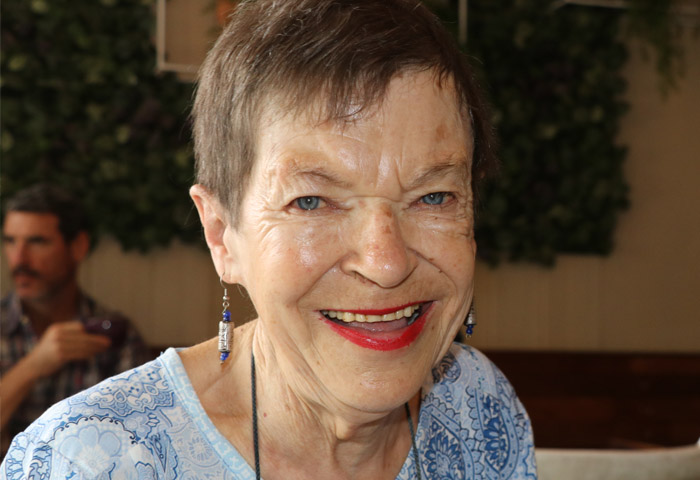
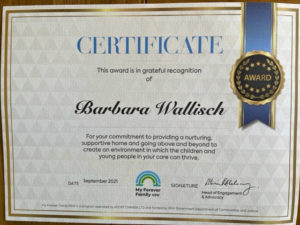
Last year, Barnardos nominated a number of our carers for the My Forever Family Carer Recognition Awards. Due to COVID, the awards were delayed and have only now been awarded. congratulations to the amazing Barbara Wallish who received an award. Below is her nomination, certificate and a video featuring her and her foster son Scott.
Barbara Wallisch has been a carer for Barnardos for over 24 years. Barbara has adopted two children (now aged 33 and 23) and has cared for siblings, a boy, now 20 years of age, and his sister 19 years of age, since they were three and two years of age respectively. These siblings have significant autism, and struggled in their younger years, requiring lots of support and special education.
Barbara has always believed in the importance of focusing on ability and not disability, with the result that the boy has obtained his license and has a job and his sister holds down a job as well. They have been supported from a young age that they can do anything that they put their mind to, and have been taught by Barbara independent living skills, and as such have the ability to cook and look after themselves in general.
In addition to the children as mentioned above, Barbara has always been available to take children who need a safe place to land on short notice, providing Intake care, respite care and crisis care. She is a carer that can always be relied upon to help out in a crisis. She is currently caring for a little two year old girl because her permanent placement has ended, until such time as she is moved into permanent care. In addition, Barbara runs family day care from her home and loves her work with young children.
Barbara has been a wonderful mother to her four children as mentioned above and to many many more children who have been touched by her love, compassion and care.
The Intensive Intervention Service Team at Barnardos Canberra teamed up with local Aboriginal Artist Eddie Longford. Together they came up with the beautiful idea on how to represent Barnardos Canberra in the local area with Indigenous Art.
Sitting on top of all in the Centre is a large circle, this is Barnardos Canberra. Around it is U shapes of all different sizes – this represents staff and clients – it also represents being welcoming and inclusiveness. You will also see that there are U shapes on the outer edge that lead to the Centre – this represents the work the staff do externally with families and children in the community. The outer U shapes on these are the clients – the track behind them represents them coming and going as needed. These symbols in this cluster also represent learning. Eddie Longford
At Barnardos, we approach our work with children, young people and families in a way that is respectful and curious of all cultures. We acknowledge Sorry Day in an effort not to repeat the mistakes of the past and recognise the great trauma caused to Aboriginal and Torres Strait Islander children and families by successive government policies.
We are committed to be brave and tackle the unfinished business of reconciliation so we can make change for all, especially Aboriginal children, young people and their families.
Reconciliation must live in the hearts, minds and actions of all Australians. We all have a role to play when it comes to reconciliation, and in playing our part we collectively build relationships and communities that value Aboriginal and Torres Strait Islander peoples, histories, cultures, and futures.
On Sunday, Barnardos Australia joined their partner, Rainbows Families, to celebrate Family Pride Day at Petersham townhall.
The event was a wonderful success, with beautiful families in all shapes and sizes enjoying activities such as a photo booth, face painting, and a free raffle prize (kindly donated by Sass & Bide) drawn by the fabulously vibrant Drag Queen, Joyce.
Thank you to the staff who assisted on the day, Rebecca Villarreal, Tracey Mulligan, Amanda Budden, Timothy Hunt, Bill Greenfield, Leonard Brown, Chelsie Bedding, and a shout out to the key people who worked behind the scenes to make this event happen, Natalie Logan, Alana Indratheb, and Mariam Rifai.
When you have a roof over your head, you can get on with life; family and friends can visit; you have an address for forms and applications; you can enroll your children in school; you are eligible for support from services; you can feel basic safety! If you don’t have one, life becomes unbelievably tough!
Our Youth and Families Homelessness Service at Auburn is very fortunate to come with transitional accommodation. Many of the families and young people coming into our program do not have anything but some bags of clothes. For example, in the past 6 months, we have helped 2 families whose houses burned down and a young pregnant mum who recently aged out of her foster family placement.
Supporting families and young people at risk of homelessness includes a lot of practical and material assistance, especially at the beginning.
Along with all the family support case management, our team is also helping to set up properties for families to move in.
We provide weekly groceries from Oz Harvest. So, pandemic or not, we regularly move around a lot of stuff!
On Wednesday 13th April 2022, Australian Mutual Bank (AMB) who has long been a supporter of Barnardos Australia through their association with the Australian Mutuals Foundation (AMF) lent a hand at the Youthchella event. The event was held at Marrickville Youth Centre, where the Barnardos Sydney Youth Services team (aka Reconnect) hosted a market stall.
Youthchella Art and Music Festival is a creative and fun event organised as part of the NSW Youth Week, a NSW government initiative that began in 1989 dedicated to young people aged from 12 to 25 years. The event featured a live interactive performance hosted by local artists, an art exhibition, local service providers stalls, health nurses offering COVID vaccinations, and free food and drinks.
At the Barnardos Sydney Youth Services (Reconnect) market stall, jewellery and information were up for grabs to encourage engagement and conversations with young people in attendance. AMB employee Debby, along with volunteers from other organisations came to assist with stall set up, presence, pack down and generally getting involved and having fun.
“Despite the rain later in the day, it was a good day and the kids appeared to have a ball” said Debby post-event.
A massive thank you to everyone for providing support to the wonderful work that day!
Damien Fitzpatrick says adoption changed his life. IMAGE CREDIT:NICK MOIR
Damian Fitzpatrick bounced between foster families between the ages of three and six after he was badly injured by his mother’s boyfriend. He was told the families would be permanent – but they weren’t. “You start not to believe the things the adults in your life tell you,” he said.
Then one couple finally adopted him, making Mr Fitzpatrick (his biological father’s name) their legal son while agreeing to facilitate contact with his biological mother. “It changes your life,” said the 35-year-old. “It takes a while to sink in [that] they can’t give you back.”
Oxford and Loughborough universities on Wednesday published a study of 210 children, including Mr Fitzpatrick, who were involved in a NSW program that allowed the adoption of abused, neglected, non-Aboriginal children between 1987 and 2013, but mandated contact with their birth family.
The study was done in partnership with Barnardos Australia, which ran the program, and found that educational and employment outcomes for the children were significantly better than for those who remained in foster care, and almost as good as the general population.
While the adopted children were more likely to have estranged or minimal relationships with their adoptive parents than the general population, those relationships were twice as likely to persist into adulthood as those between care leavers and foster parents.
“One of the most significant findings was the extent to which the adoptive parents acted as a protective factor for the children. They stood by them through thick and thin,” said Harriet Ward, Emeritus Professor of Child and Family Research at Loughborough University.
A key focus for researchers was the contact between children and their birth parents, as in other jurisdictions that contact is rare and often takes the form of letters.
Almost all birth parents of children in the study were struggling with issues such as mental illness and drugs and alcohol, and serious maltreatment was the main reason for removing more than 90 per cent of children from home. Like Mr Fitzpatrick, many had multiple foster placements before they were adopted.
More than 85 per cent of adoptees had continuing contact with at least one birth parent, and 87 per cent continued to see a grandparent or other relatives. In 40 per cent of cases, contact visits went smoothly, but more than half of the adoptees and their parents found them problematic. Nonetheless, two thirds found them beneficial.
Issues included birth parents’ behaviour during contact – some arrived affected by drugs or alcohol, and some brought the person who abused the child. Two thirds of decisions to cease contact were made by the child themselves.
“It’s not about creating happy families,” said Professor Ward. “Everyone had to confront the issues they had. Adoptees had to learn why they had been placed for adoption. Birth parents had to confront their views of adoptive parents.
“The myths dissolved. They came to see that their birth parents were people who had many difficulties in their lives. The birth parents came to see the adoptive parents as people who loved their children.
“The adoptees could see that the grass was not greener on the other side. A lot of them had good relationships with grandparents, and because of mandatory contact.”
Professor Ward said the study demonstrated that when the choice was between adoption and foster care, an adoptive placement “is more beneficial for the child. It’s more likely to last, and the outcomes are better.” However, she said permanent fostering could give children security if it was well-supported, and cited Scandinavia as a region in which this was done well.
Adoption remains a highly sensitive and contentious issue in Australia, due to the trauma faced by stolen generations of Indigenous children and decades of forced adoption last century. Barnardos refers all Aboriginal children to Aboriginal foster agencies.
In 2014, NSW introduced reforms to make adoption the preferred option for children who are removed by courts from their families, and where no other relative can care for them. Only the ACT has similar laws.
Barnardos chief executive Deirdre Cheers hoped the study would prompt other states to consider NSW’s model, and prompt NSW to make the adoption process smoother.
“Foster care is not permanent,” she said. “Some states have permanent care orders, but the reality is they can be challenged over and over again in the court, and that is very destabilising for children and foster carers.
“We are seeing very few open adoption care plans going to the children’s court, we’re seeing lawyers who are advocating strongly on the basis of adult rights, and not considering the children’s rights issues.”
Professor Amy Conley Wright from Sydney University said adoption – which permanently severs the legal relationship with the birth family – worked for some children, but not all.
“It is particular for the individual, that’s why you always have to be cautious in saying there’s a simple solution,” she said. “That’s why it’s good to have different types of arrangements for different circumstances.”
Shaniece at the Bundaleer Community Centre in Warrawong
My name is Shaniece and I grew up on the Bundaleer Housing Estate in Warrawong. I moved here when I was 10 years old – and it was a pretty scary place. There was a lot of violence, drugs and alcohol abuse.
I would often come down to the Bundaleer Community Centre, where Barnardos would support kids like me. They provided homework help, breakfast or afternoon snacks and a safe space for us
to hang out with friends. Coming here showed me I wasn’t alone. That others shared the same feelings as me.
As a teenager, I dealt with this stigma of people looking down on you because of where you’re from. You felt that because you lived in a bad area, you’re not worthy of support. But Barnardos believed in me. I joined their youth group and they got me a tutor during high school. This place helped me out so much with my education.
The best thing about youth group was it made me feel important. It made me feel valued. And it led me to my current job at Beyond Empathy, where I now do community-based work at Bundaleer. I talk to neighbours, kids and teens. I support them, give them advice and we work together making movies and podcasts. It’s a great opportunity for kids to get creative and gives the community an avenue to speak out. To have their voices heard. I’ve come full circle. I used to come here as a kid, as a teenager and now I’m an adult coming in here helping the kids out in my community. I couldn’t think of anything else better to do with my life to be honest, it’s the best thing ever.
I know what it’s like living here – it’s really not a bad place. So, it feels good to give back to Bundaleer for what it’s done for me. To see kids that I used to play with now growing up into teenagers, and me giving them support, just like Barnardos supported me, is just surreal.
I’m so thankful that Barnardos were part of my childhood and it’s great to see them continuing to support children and families through the Bundaleer Community Centre. It’s important to invest in children because they’re the future. They absorb so much from what they see and from what adults do. Barnardos gives them the opportunity to learn and gives them the space to be who they are.
Bernadette and Matt Latimer, adoptive parents to four siblings (L-R) Zander, Isaac, Matt, Eve, Bernadette and Zavier.
One of the things that made us want to look after siblings, is that we didn’t want anyone to be pulled apart. We didn’t want them to go to different homes where they’d grow up not knowing their family.
That’s why we have decided to give Zander, Eve, Isaac and Zavier a permanent place to call home. It has changed all our lives forever, but we wouldn’t have it any other way.
When they first came into our care, my husband Matt and I were over the moon. I just wanted to hug them and not let them go. And now that we’ve adopted them, we can stay together as a family.
We’ve watched each and every one of them grow in confidence and blossom into their own unique personalities. It’s such a proud moment for us as parents to know that we’re making a real difference to their lives. We have built so much trust with them and as a result, the love between us just continues to build.
As the eldest sibling, Zander had to shoulder a lot of the responsibilities caring for his younger brothers and sister. But now that he has the chance to simply enjoy his youth, Zander’s a whole new person. He is in the top 10% of his selective high school and has been awarded the Volunteer of the Year Award for his involvement with our local surf lifesaving club. As parents, we give them every opportunity to participate in extra-curricular activities. We want them to experience everything life has to offer.
I would definitely encourage people to take on siblings because these kids need that security. So many have been pulled apart already, that’s why open adoption is so fulfilling – it transforms
their lives.
And as our beautiful 13-year-old daughter Eve said about being adopted with her brothers, “We all get to feel safe and happy together and we all get to be in the same new life together.”
Learn more about how you can make a difference through fostering.
WHAT WE SEE
We see beyond the sleepover in cars and understand the underlying issues.
After escaping family violence, a parent and their child have nowhere safe to stay and are currently waiting for refuge accommodation.
We see beyond the sleepover in cars and understand the underlying issues.
After escaping family violence, a parent and their child have nowhere safe to stay and are currently waiting for refuge accommodation.
HOW BARNARDOS HELPS
We understand that families and children who have experienced domestic and family violence need more than just a safe place to stay. At Barnardos, we work closely with children to identify their unique needs and provide tailored support for each family member.
Support with transitional accommodation
Providing safety planning
so that families can leave violence for good
Access to counselling services
Children who have survived domestic and family violence often experience long-term impacts into adulthood. Our caseworkers recognise the importance of specialist support to help them recover and thrive.
HOW BARNARDOS HELPS
We understand that families and children who have experienced domestic and family violence need more than just a safe place to stay. At Barnardos, we work closely with children to identify their unique needs and provide tailored support for each family member.
Support with transitional accommodation ♡ Providing safety planning so that families can leave violence for good ♡ Access to counselling services
Children who have survived domestic and family violence often experience long-term impacts into adulthood. Our caseworkers recognise the importance of specialist support to help them recover and thrive.
You can help too! A simple gift todaycan support a child who has experienced domestic and family violence to recover and heal.

 Our centres